E-mail seo@sino-purification.com

Time:2025-04-25 11:05:08 Reading volume:
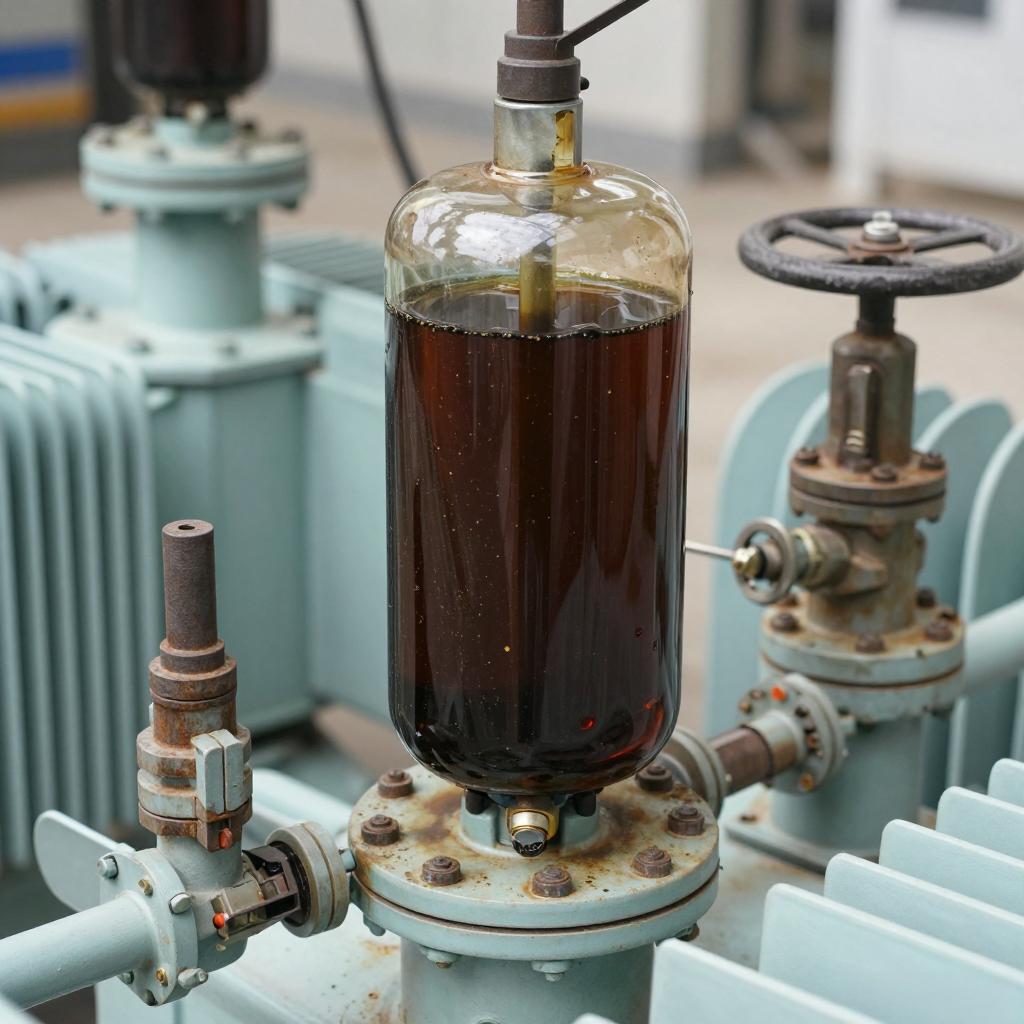
Removing impurities from transformer oil is the key to ensuring the transformer's insulation performance, cooling efficiency and long-term stable operation. Impurities mainly include moisture, solid particles, gas (such as air) and degradation products (such as acid, colloid). The following are the purification methods of the system:
- Equipment:
- Plate filter: Use filter paper or filter cloth to intercept particles (the accuracy is usually 1-10 microns).
- Vacuum filter: Combined with suction filtration to improve efficiency, suitable for highly polluted oil.
- Steps:
- Pass the oil through a multi-stage filter (coarse filtration → fine filtration) and replace the filter material regularly.
- In case of severe pollution, it can precipitate for 24 hours before filtering.
- Principle: Heat the oil in a vacuum environment to reduce the boiling point of water to evaporate it, and extract dissolved gas at the same time.
- Equipment: Vacuum oil filter (such as a two-stage vacuum oil filter).
- Parameters:
- Temperature: 50-65℃ (avoid overheating and oxidation).
- Vacuum: ≤0.1 kPa (absolute pressure).
- Treatment time: Circulate until the moisture is ≤10 ppm (IEC 60422 standard).
- Effect: Free water, dissolved water and air can be removed simultaneously.
- Adsorbent:
- Activated alumina: removes acidic substances.
- Silica gel or molecular sieve: deep dehydration (moisture can be reduced to less than 5 ppm).
- Activated clay: adsorbs colloid and pigment (subsequent filtration is required).
- Method:
- Percolation method: let the oil flow slowly through the adsorbent-filled column.
- Stirring method: add the adsorbent to the oil, stir and filter (need to control the time to prevent secondary pollution).
- Applicable scenarios: oil containing a large amount of free water or large particles (such as sudden water inflow into the transformer).
- Equipment: high-speed centrifuge (separation of impurities with a density difference of ≥ 0.1 g/cm³).
- Limitations: unable to remove dissolved water and fine particles.
- Principle: using an electrostatic field to adsorb charged impurities on electrodes.
- Advantages: can handle submicron particles (<0.1 microns) and colloids.
- Applicable: deep purification of ultra-high voltage transformer oil.
- Steps:
1. Acid washing: Use sulfuric acid or phosphoric acid to remove oxidation products (concentration must be strictly controlled).
2. Alkali neutralization: Add sodium hydroxide solution to neutralize residual acid.
3. Water washing: remove saponification, and then vacuum dehydration.
- Note: Chemical regeneration requires professional operation and may change the performance of oil products.
1. Pretreatment: coarse filtration to remove visible impurities.
2. Heating: oil temperature rises to 50-60℃ (reduces viscosity).
3. Vacuum dehydration: spray degassing and evaporating water in a vacuum tank.
4. Fine filtration: through 1-5 micron precision filter.
5. Testing: measure breakdown voltage (≥50 kV/2.5mm), moisture (≤15 ppm), acid value (≤0.1 mg KOH/g).
- Safety: Oil heating needs to prevent an explosion, and the vacuum system must be well sealed.
- Compatibility: Avoid using filter materials that react with oil products (such as certain synthetic fibers).
- Environmental protection: waste adsorbents and filter residues are treated as hazardous waste.
- Online monitoring: install a moisture sensor or particle counter in oil for real-time monitoring.
- Excessive sludge: colloid content > 0.1%.
- Severe oxidation: acid value > 0.3 mg KOH/g.
- Electrical performance failure: breakdown voltage still does not meet the standard after repeated treatment.
For large power transformers, it is recommended to use a vacuum oil filter + adsorbent combined treatment regularly and follow IEEE Std 637 or GB/T 14542 standards.
Explosion-Proof Oil Purifier Selection Guide: Which Working Conditions Require One?
How to Prevent Rapid Lubricating Oil Degradation in Steel Mills
Can an Oil Purifier Remove Acid? Understanding the Limits of Oil Regeneration
Chemical Industry Oil Purification: How to Choose the Right Oil Purifier
Why Is Coalescing Water Removal More Stable Than Vacuum Dehydration?