E-mail seo@sino-purification.com

Time:2026-11-20 16:20:33 Reading volume:
The price of a turbine oil purifier depends on its treatment capacity, dehydration technology, filtration accuracy, vacuum system, and automation level. Different configurations are designed for different oil conditions and operating requirements. Understanding these factors helps buyers compare equipment specifications and choose a suitable purification system.
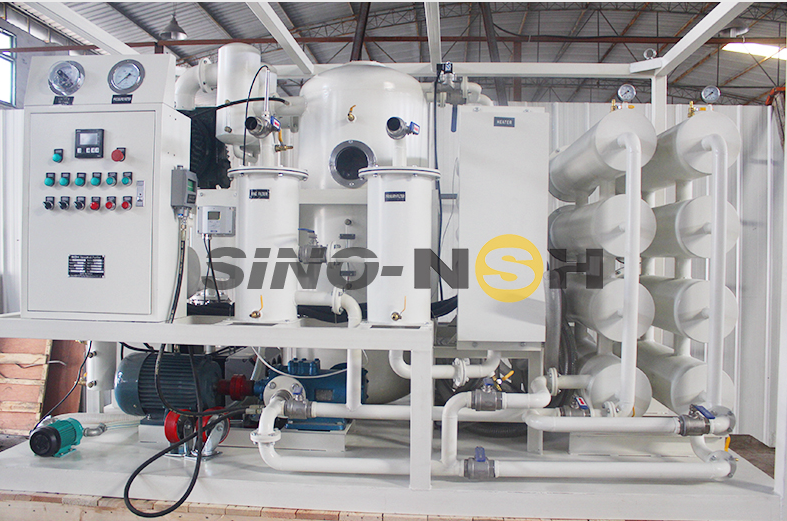
Treatment capacity is one of the main factors affecting the price of a turbine oil purifier.
Common capacities range from small units for routine maintenance to large systems designed for continuous industrial operation.
Higher-capacity equipment generally requires larger pumps, filters, pipelines, and processing chambers, increasing manufacturing costs.
When selecting a machine, consider the total oil volume, required treatment time, and actual operating conditions rather than choosing the largest capacity available.
Water contamination is a common problem in turbine oil systems. However, removing free water, emulsified water, and dissolved moisture requires different treatment methods.
The main configuration options include:
Free water separation: Removes water that has separated from the oil.
Vacuum dehydration: Uses vacuum conditions to remove moisture and dissolved gases.
Demulsification: Helps separate water from severely emulsified turbine oil.
If the oil contains significant emulsified water, a purifier with suitable demulsification technology may be required. These additional treatment capabilities can increase equipment costs.
Filtration performance also affects the overall equipment price.
Important factors include filter micron rating, filtration stages, filter area, and filter element materials.
Higher filtration requirements may require additional filtration stages or specialized filter elements.
However, finer filtration is not always better. The filtration configuration should match the turbine manufacturer's requirements and the oil's cleanliness target.
For vacuum-type turbine oil purifiers, the vacuum and heating systems are important cost components.
The vacuum pump capacity, vacuum chamber design, heating power, and temperature control system all influence the equipment configuration.
Heating helps reduce oil viscosity and supports moisture removal under suitable operating conditions. However, the operating temperature must be appropriate for the turbine oil to avoid unnecessary thermal stress.
Oil pumps and electrical control systems also contribute to price differences.
The main considerations include:
Oil pump type, flow rate, and motor power.
Electrical components and motor brands.
Manual or PLC-based automatic control.
Pressure, temperature, and liquid-level protection.
Automatic filter backwashing, where required.
More advanced automation can improve operating convenience and reduce manual intervention, but it also increases the initial investment.
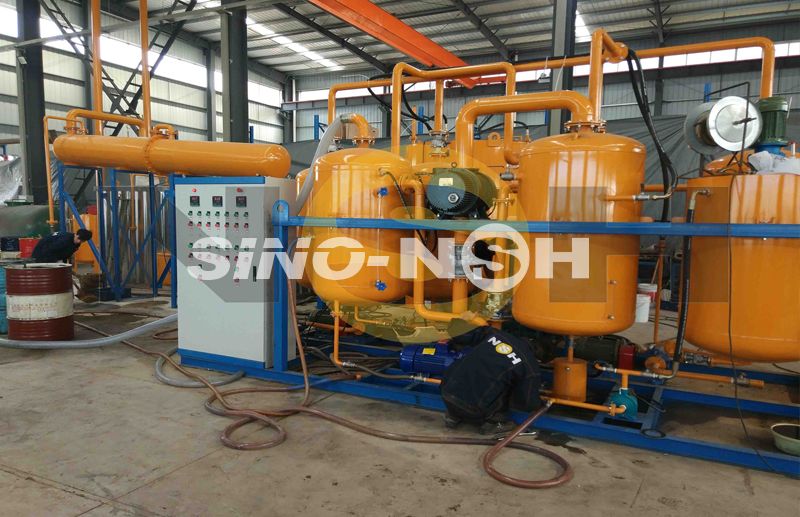
The final price may also depend on equipment materials and project-specific requirements.
Examples include stainless steel pipelines, special sealing materials, explosion-proof electrical components, mobile skid-mounted structures, and customized inlet and outlet connections.
For export projects, buyers should also confirm local voltage, frequency, electrical standards, and control requirements before requesting a quotation.
When comparing quotations from different manufacturers, do not focus on the initial price alone.
Check whether the equipment offers comparable:
Treatment capacity and operating conditions.
Dehydration and demulsification performance.
Filtration accuracy and filter configuration.
Vacuum pump and heating system specifications.
Automation and safety protection.
Materials, accessories, and after-sales support.
Two machines with the same rated capacity may have significantly different prices because their purification technologies and configurations are not necessarily the same.
1. Does a higher-capacity turbine oil purifier always cost more?
Generally, yes. However, dehydration technology, filtration requirements, and automation also affect the final price.
2. Does every turbine oil purifier require demulsification?
No. It depends on the oil condition. For oil containing mainly free water, basic dehydration may be sufficient. Severely emulsified oil may require additional demulsification capabilities.
3. What information is needed for a turbine oil purifier quotation?
Buyers should provide the oil type, required treatment capacity, water contamination level, emulsification condition, target cleanliness, and local power supply.
The price of a turbine oil purifier is determined by the complete equipment configuration rather than a single component.
Before purchasing, evaluate the actual oil condition and required purification results. Comparing technical specifications and treatment capabilities will help you select a cost-effective solution for your turbine lubrication system.
Need a Turbine Oil Purifier?
Sino-NSH provides turbine oil purification equipment with different treatment capacities and configurations. Contact our team with your application requirements to discuss a suitable solution.
How to Confirm Voltage, Frequency and Control Panel Language When Buying an Oil Purifier

Oil Filtration vs. Oil-Water Separation: What's the Difference?
Why Different Oil Types Cannot Always Use the Same Oil Purifier
Explosion-Proof Oil Purifier Selection Guide: Which Working Conditions Require One?