E-mail seo@sino-purification.com

Time:2025-12-31 13:35:45 Reading volume:
Energy Consumption and Efficiency of Vacuum Oil Purifiers
There is currently no unified mandatory national standard for the energy consumption of vacuum oil purifiers. In real-world applications, energy usage depends mainly on equipment design, technical configuration, operating conditions, and oil properties. Even so, energy efficiency remains a critical indicator for evaluating performance and operating cost.
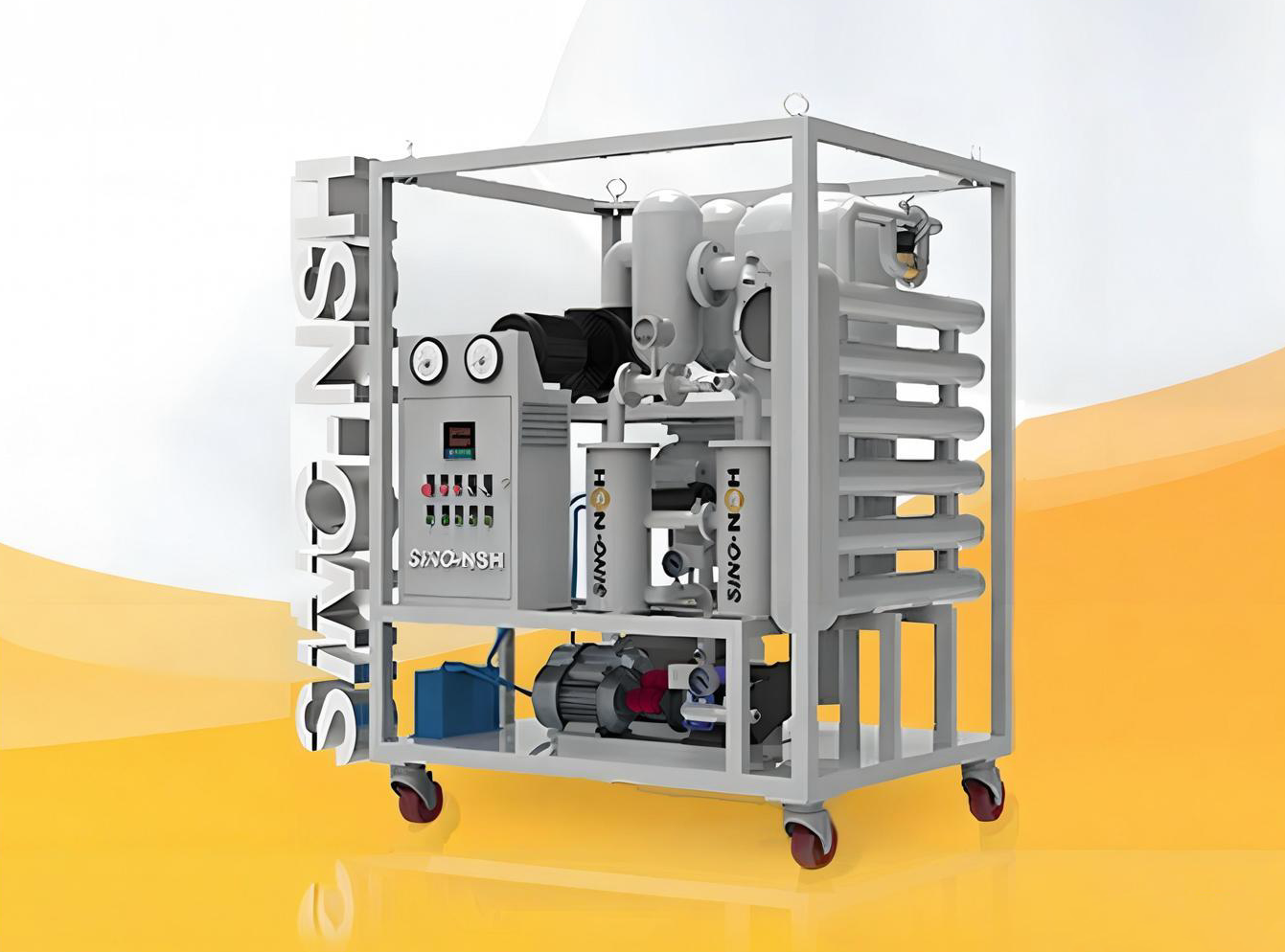
The total energy consumption of a vacuum oil purifier consists of the following systems:
Reduces oil viscosity and improves dehydration and degassing efficiency.
Accounts for 60%–80% of total energy consumption
Power ranges from several to hundreds of kilowatts
The primary energy-consuming unit
Creates and maintains the vacuum environment needed for moisture and gas removal.
Energy use depends on vacuum degree and system efficiency
Provides oil circulation through the filtration system.
Power consumption relates to flow rate and pressure loss
Includes electrical controls, sensors, and cooling systems.
Lower individual consumption, but part of total energy use
Specific Energy Consumption (SEC)
Definition:
Electrical energy consumed per unit volume or mass of processed oil.
Formula:
SEC (kWh/m³ or kWh/t) = Total Energy Consumption (kWh) ÷ Processed Oil Volume (m³ or t)
Significance:
The most widely used energy efficiency indicator
Lower SEC indicates higher energy efficiency
Influenced by oil moisture level, target cleanliness, inlet temperature, and operating parameters
Vacuum Degree
Higher vacuum improves dehydration efficiency but increases vacuum pump energy demand. Optimized system design balances performance and power consumption.
Heating Temperature Control
Accurate temperature control avoids overheating and energy waste. Segmented heating and high-efficiency heat exchangers improve thermal efficiency.
System Design
Optimized piping, effective insulation, and efficient vacuum separation structures reduce overall energy loss.
Although no direct energy consumption standard exists, vacuum oil purifiers must comply with related regulations that indirectly influence energy efficiency:
JB/T 5285-2008 – Vacuum Oil Purifier
GB/T 25709-2010 – Turbine Oil Purifier and other oil-specific standards
Electrical safety and motor efficiency standards
Request specific energy consumption data under defined operating conditions.
Evaluate core components, including energy-saving heaters, high-efficiency vacuum pumps (VFD), and oil pumps with high-efficiency motors.
Prioritize automation and intelligent control to reduce unnecessary energy use.
Review energy efficiency test reports or certifications from the manufacturer.
Conclusion
While vacuum oil purifiers lack a unified energy consumption standard, specific energy consumption, system optimization, and component efficiency provide practical evaluation benchmarks. Choosing equipment with efficient heating, optimized vacuum systems, and intelligent control can significantly lower operating costs without compromising purification performance.