E-mail seo@sino-purification.com

Time:2025-06-11 11:53:42 Reading volume:
An efficient method for filtering hydraulic oil requires selecting the appropriate combination of technologies according to the type of pollution (particles, moisture, gas, etc.) and working conditions. The following is a step-by-step optimization solution that takes into account both effectiveness and practicality:
1. Solid particle pollution
- Best equipment:
- Three-stage filtration system (coarse → medium → fine):
- First stage: 100μm metal mesh (intercepting large particles)
- Second stage: 10μm glass fiber filter element (NAS 1638 Class 8)
- Third stage: 3μm high β filter element (β₃≥1000, ISO 4406 14/12/9)
- Centrifugal pre-filtration: handles ultra-high pollution oil (such as oil containing a large amount of metal chips).
- Key points for operation:
- replace the filter element immediately if the pressure difference is >0.15MPa to avoid the bypass valve opening and causing unfiltered oil to enter the system.
2. Water pollution
- Dehydration scheme comparison:
| Method | Dehydration limit | Time consumption | Applicable scenarios |
|----------------|--------------|----------|---------------------------|
| Coagulation separation | ≤50 ppm | 2-4 hours | Emulsified oil, routine maintenance |
| Vacuum dehydration | ≤10 ppm | 4-8 hours | Transformer oil, precision system |
| Molecular sieve adsorption | ≤20 ppm | 24 hours | Trace moisture removal (spare oil) |
- Key parameters:
- The coalescing oil filter needs to control the oil temperature at 40-50℃ (too high will destroy the coalescence effect).
- The vacuum degree of the vacuum oil filter needs to be ≤-0.095MPa, combined with 50-60℃ heating.
3. Gas/oxide pollution
- Vacuum degassing:
- The oil is sprayed into the vacuum tank in an atomized form, and the dissolved gas escapes and is then extracted.
- The gas content can be reduced from 0.5% to below 0.1%.
- Electrostatic purification:
- For colloids/oxides, 1μm filtration (such as Pall electrostatic oil filter) is required.
1. Combined process (severely contaminated oil)
- Steps:
1. Centrifugal pretreatment (removal of large particles) → 2. Vacuum dehydration and degassing → 3. β₅=200 fine filtration → 4. Molecular sieve adsorption of residual moisture
- Effect:
- NAS Class 12 oil can be purified to Class 5, with moisture ≤15ppm.
2. Online + offline collaborative filtration
- Online filtration:
- Install a bypass circulation oil filter (such as Donaldson Duplex) to continuously remove particles.
- Offline filtration:
- Deep treatment with a vacuum oil filter every 6 months to solve the moisture/gas that cannot be removed online.
1. Flow matching:
- Oil filter flow ≥ 1.5 times the system tank volume (e.g. 200L tank, select 300L/h equipment).
2. Filter element performance:
- Servo system: absolute filtration accuracy 1μm (β₃≥1000).
- Ordinary hydraulic: 5μm (β₅≥200).
3. Material compatibility:
- Phosphate ester oil: Use fluororubber sealing filter element.
- High temperature environment: Stainless steel skeleton filter element (resistant to 150℃).
- Filter element regeneration:
- The metal mesh filter element can be reused 3-5 times after ultrasonic cleaning.
- Phased procurement:
- First, purchase a centrifuge to treat highly polluted oil, and then gradually add vacuum/coalescing modules.
- Oil reuse:
- Filtered oil can be used for secondary equipment (such as hydraulic fixtures) to reduce new oil consumption.
- Problem: Oil NAS Class 10, water content 800ppm, frequent valve jams.
- Solution:
1. The coalescing oil filter dehydrates to 100 ppm (4 hours).
2. 5μm filter element cyclic filtration to NAS Class 6.
- Results:
- The oil change cycle was extended from 6 months to 2 years, and the valve failure rate decreased by 90%.
- Misconception 1: Only filter without rechecking
- Must be verified with a particle counter + moisture meter (test once every 2 hours of filtration).
- Misconception 2: Ignore the influence of temperature
- When the temperature is low (<10℃), it must be heated to 30℃ before filtering, otherwise the viscosity will affect the accuracy.
The most efficient hydraulic oil filtration requires "precise diagnosis + combined technology":
1. Particle pollution → three-stage filtration (β value filter element as the core).
2. Water pollution → coalescence/vacuum (according to accuracy requirements).
3. Comprehensive pollution → centrifugal + vacuum + fine filtration combination.
Combined with online monitoring + regular offline deep filtration, the life of hydraulic oil can be extended by 3-5 times, and the equipment failure rate can be reduced by more than 70%.
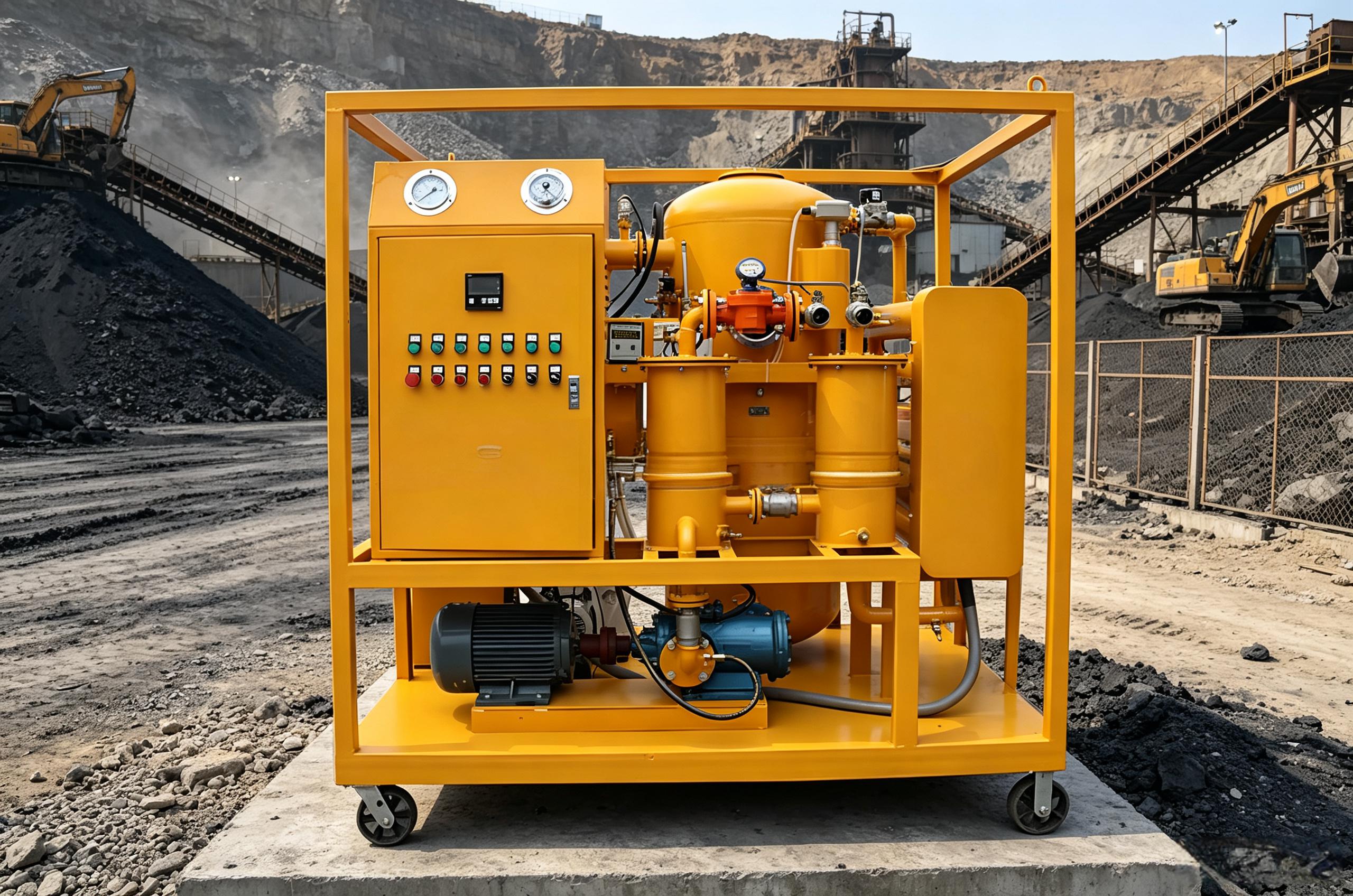
Explosion-Proof Oil Purifier Selection Guide: Which Working Conditions Require One?
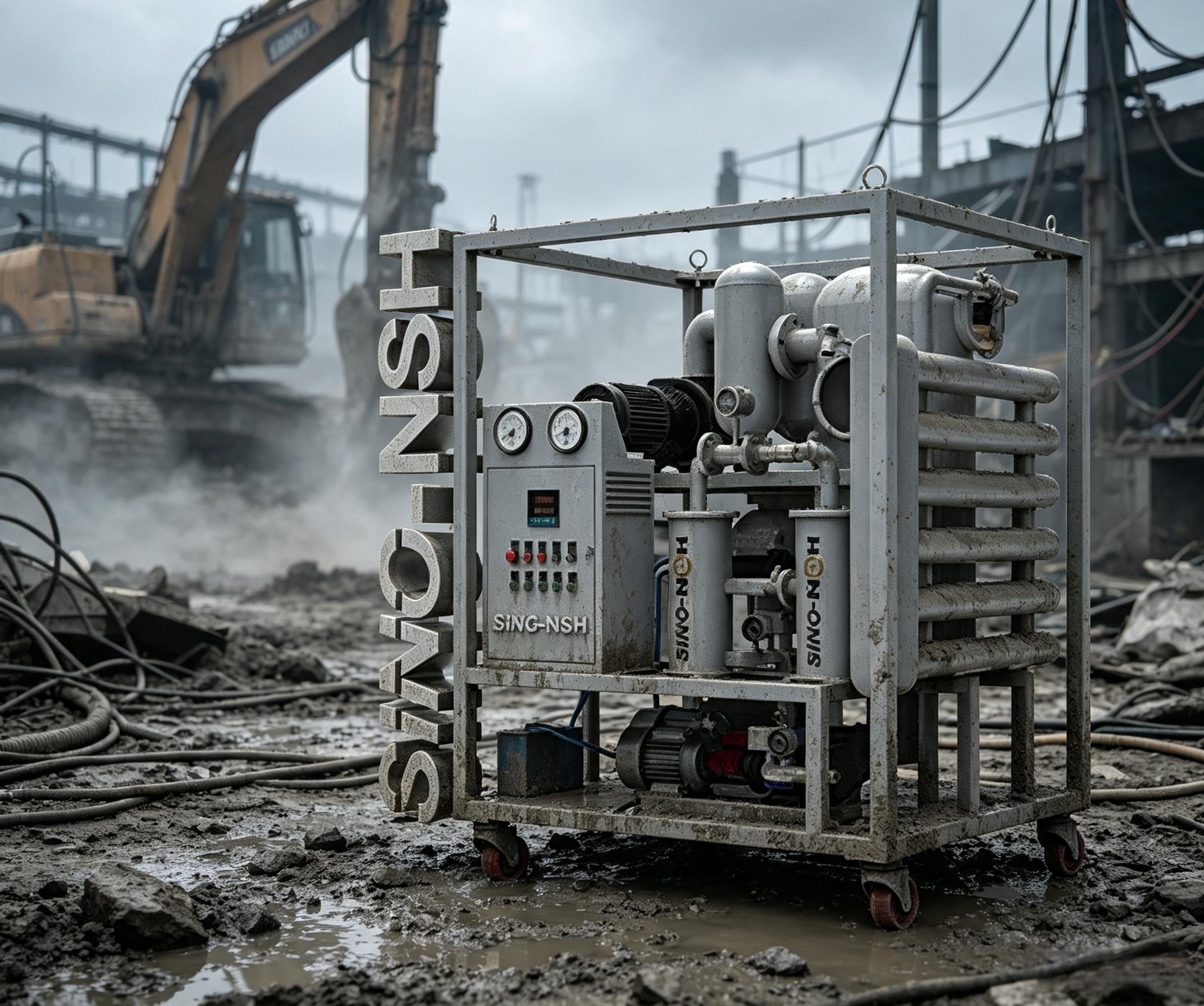
How to Prevent Rapid Lubricating Oil Degradation in Steel Mills
Can an Oil Purifier Remove Acid? Understanding the Limits of Oil Regeneration
Chemical Industry Oil Purification: How to Choose the Right Oil Purifier
Why Is Coalescing Water Removal More Stable Than Vacuum Dehydration?