E-mail seo@sino-purification.com

Time:2026-06-11 16:54:37 Reading volume:
In industrial lubrication, hydraulic systems, and transformer maintenance, fluid quality directly dictates equipment longevity. Choosing the incorrect filtration technology not only yields poor purification results but also escalates operational costs and risks unexpected machine downtime.
Vacuum, centrifugal, and coalescing filters each operate on distinct mechanical principles. This streamlined guide breaks down their core pros and cons to help you rapidly match the right technology to your specific application.
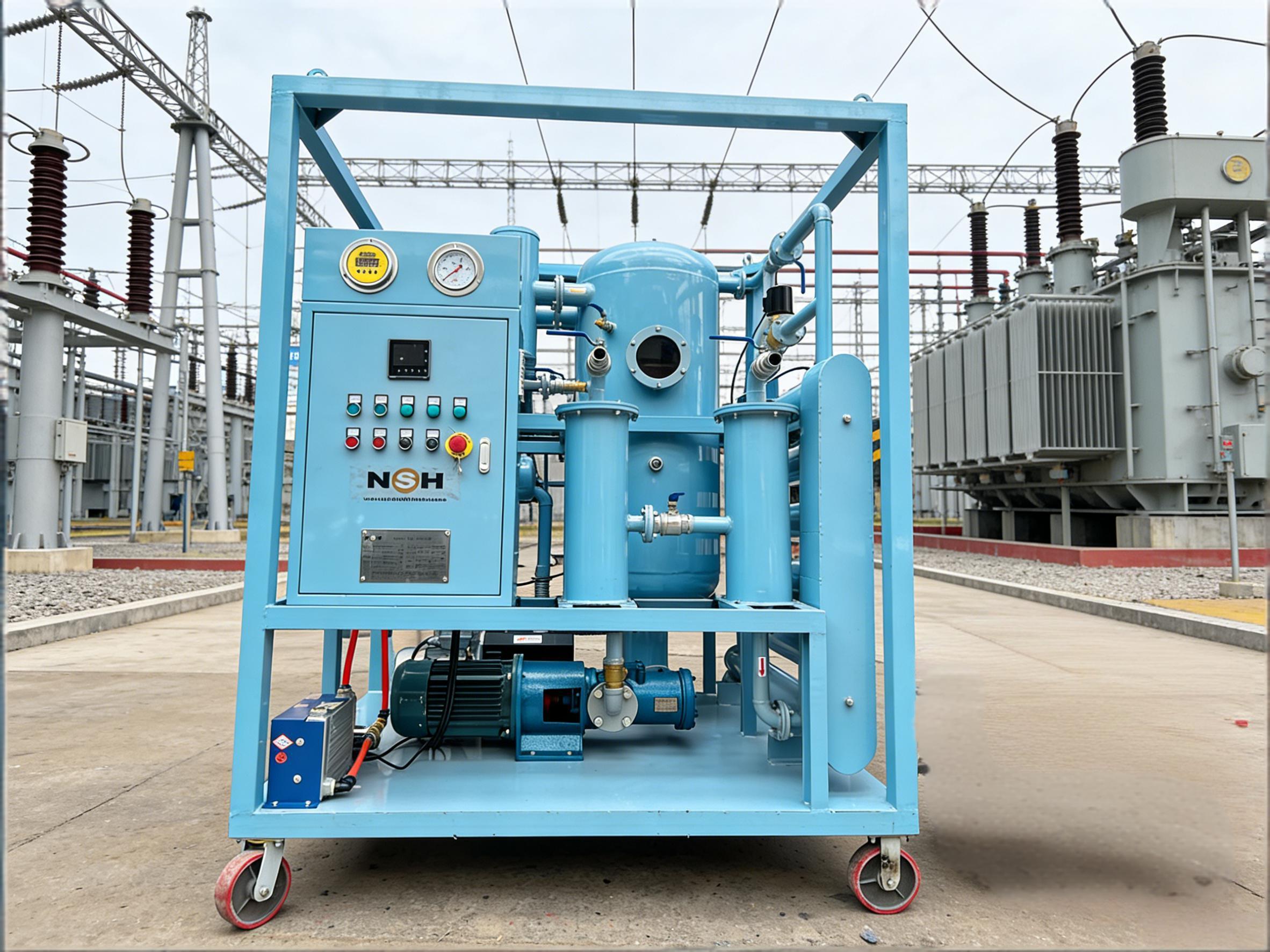
Vacuum purifiers utilize vacuum distillation. By lowering the internal system pressure, the boiling point of water drops significantly. Combined with low-temperature heating and atomizing spray techniques, moisture and dissolved gases are rapidly vaporized and extracted without damaging the oil's chemical properties.
Strengths: Achieves deep dehydration (reducing water content to below 15 ppm); significantly increases the dielectric strength of insulating oils; highly effective at removing dissolved air and volatile gases.
Limitations: Higher upfront purchase and ongoing maintenance costs; reduced efficiency with high-viscosity oils; performance drops at high altitudes; requires trained operators.
Transformer and switchgear insulating oils.
Turbine lubrication systems.
High-precision, sensitive hydraulic systems.
Centrifugal separators utilize high-speed rotation (typically 5,000 to 10,000 RPM) to generate powerful centrifugal forces. Because water and solid particulates are denser than oil, they are driven outward against the bowl wall, allowing for continuous, rapid separation of bulk contaminants.
Strengths: High flow rates with exceptionally fast free-water removal; no consumable filter elements to replace, resulting in near-zero ongoing material costs; excellent for heavy sludge and bulk solids pre-treatment.
Limitations: Cannot remove emulsified or dissolved water; poor fine-particle filtration efficiency; energy consumption is 3 to 5 times higher than coalescing systems; high-speed rotating parts increase mechanical wear; can induce mechanical shear that damages oil additives; risks a 5% to 10% oil loss during sludge discharge.
Marine fuel and diesel purification.
Rolling emulsions and heavy metalworking fluids.
Crude oil degumming in oil mills.
Coalescing systems utilize a two-stage physical filtration process. First, oil passes through a hydrophilic coalescing element that forces microscopic, emulsified water droplets to bond together into larger drops. Second, these heavy drops sink to the bottom of the housing while a hydrophobic separator element allows only the clean oil to pass through.
Strengths: Excellent demulsification capabilities (easily breaks tight oil-water emulsions); highly energy-efficient (consumes only about 20% of the energy of a centrifuge); no mechanical shear, preserving additive packages; zero oil mist loss; compact, lightweight design ideal for mobile, plug-and-play field units.
Limitations: Cannot remove dissolved water (cannot achieve below 15 ppm moisture); coalescing and separator elements are consumables that require periodic replacement; highly viscous or heavily sludged fluids will cause premature element clogging.
Industrial hydraulic oils, standard lubricating oils, and turbine oils.
Diesel fuel and light fuel conditioning.
Mobile maintenance fleets and field service operations.
Deep dehydration & maximizing dielectric strength: Choose Vacuum Purifier
High water & heavy solids bulk pre-treatment: Choose Centrifugal Filter
Tight water emulsions requiring system portability: Choose Coalescing Filter
Transformer & Insulating Oils: Must use Vacuum Purifier only.
Hydraulic & Lube Oils (Water $\le$ 200 ppm): Choose Coalescing Filter (Best overall value).
High-Viscosity Fluids or High-Altitude Sites: Avoid vacuum systems. Use Coalescing or Centrifugal filters.
Hazardous Environments (Oil & Gas, Mining): Must use Explosion-Proof Coalescing or Vacuum Systems.
Low upfront budget & minimal maintenance complexity: Choose Coalescing Filter
Long-term, high-precision fluid purification: Choose Vacuum Purifier
Continuous high flow rates with zero consumable costs: Choose Centrifugal Filter
There is no "one-size-fits-all" solution in industrial oil filtration. Vacuum systems excel in high-voltage power applications requiring deep gas and moisture removal. Centrifugal systems are the heavy-duty choice for raw, bulk water and solid contamination pre-treatment. Coalescing systems offer the best cost-to-performance ratio for daily hydraulic and lubrication maintenance where portability and demulsification are key.
Next Step: Before purchasing, perform a professional laboratory oil analysis to determine your fluid’s current ISO cleanliness code, viscosity, and precise ppm water content. [Contact our technical engineering team today] with your oil analysis report for a customized filtration blueprint.
Explosion-Proof Oil Purifier Selection Guide: Which Working Conditions Require One?
How to Prevent Rapid Lubricating Oil Degradation in Steel Mills
Can an Oil Purifier Remove Acid? Understanding the Limits of Oil Regeneration
Chemical Industry Oil Purification: How to Choose the Right Oil Purifier
Why Is Coalescing Water Removal More Stable Than Vacuum Dehydration?