E-mail seo@sino-purification.com

Time:2026-04-15 13:33:47 Reading volume:
In modern industrial operations, an oil purifier is often viewed as a maintenance tool. However, from a thermodynamic and mechanical efficiency perspective, it is a powerful Energy Saving Device.
By maintaining oil at peak dielectric and lubricity standards, purifiers reduce systemic energy loss across your entire infrastructure.
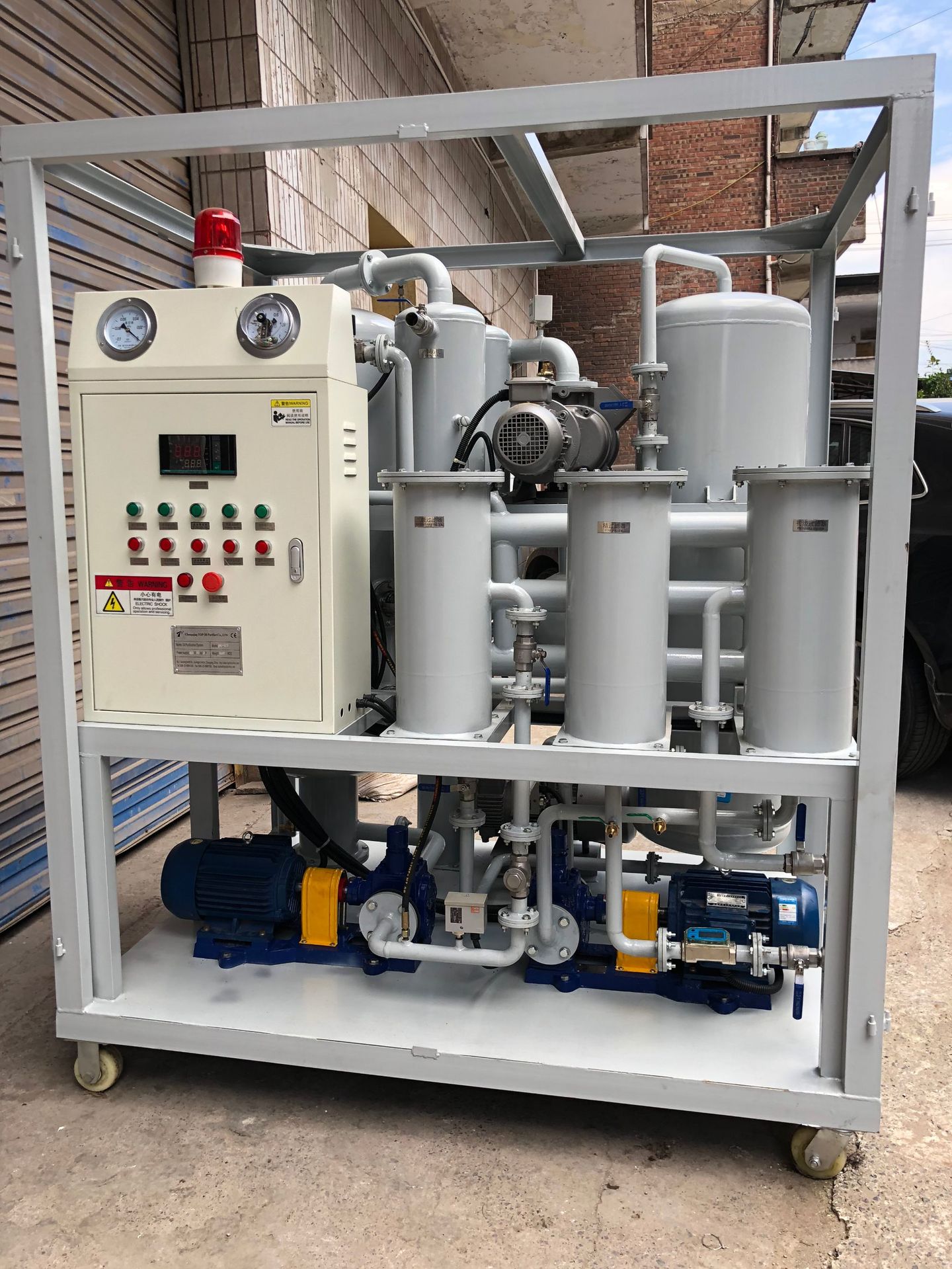
When oil degrades, it develops "micro-sludge" and accumulates metallic particulates. This increases the fluid’s internal friction and the mechanical resistance between moving parts.
The Problem: Increased friction forces the motor to draw more current (Amperes) to maintain the same RPM or torque.
The Purifier Solution: High-precision filtration (down to $1\mu m$ or $3\mu m$) removes these "invisible" abrasives.
Energy Impact: Studies indicate that maintaining a clean lubrication system can reduce motor power consumption by 2% to 5%.
For users operating hydraulic presses or injection molding machines, energy efficiency is tied to Volumetric Efficiency.
The Problem: Contaminants erode the precision edges of control valves and pump vanes. As these components wear, "internal leakage" occurs. The pump must then work harder (consuming more electricity) to maintain the required system pressure.
The Purifier Solution: By keeping the oil ISO 4406 cleanliness levels within specification, you prevent component "blow-by."
Energy Impact: Maintaining original tolerances can prevent an energy efficiency drop of 10% to 15% over the equipment's lifecycle.
This is particularly critical for Transformer Oil and Turbine Oil applications.
The Problem: Water and oxidation products (sludge) have much lower thermal conductivity than pure oil. When sludge coats the surfaces of heat exchangers or transformer fins, it acts as an insulator.
The Consequences: The cooling system (fans and pumps) must run longer and at higher speeds to dissipate heat. In transformers, higher heat also leads to higher $I^2R$ (copper) losses.
The Purifier Solution: Vacuum dehydration and degasification remove dissolved water and gases, preventing sludge formation and ensuring maximum heat transfer.
A high-quality purifier should not consume more energy than it saves. Modern units utilize "Smart Energy" features:
Regenerative Heat Exchangers: Top-tier purifiers use the outgoing hot, clean oil to pre-heat the incoming cold, dirty oil. This can reduce the heating element's power consumption by up to 40%.
VFD (Variable Frequency Drives): Instead of running a pump at 100% capacity constantly, VFDs adjust the flow rate based on the oil's viscosity and filter saturation, saving significant electricity during long processing cycles.
| Parameter | System with Degraded Oil | System with Continuous Purification |
| System Fluidity | High viscosity/Friction | Optimized Film Strength |
| Cooling Demand | High (due to sludge insulation) | Low (optimal heat exchange) |
| Pump Duty Cycle | Extended (to compensate for leaks) | Nominal (per design) |
| Oil Change Interval | 5,000 - 8,000 Hours | 25,000+ Hours |
| Estimated Energy Saving | Baseline | 5% - 12% Total System Savings |
A: No. For example, a purifier might draw 30kW during a 10-hour cycle, but by cleaning the oil in a 500kW hydraulic system, it can reduce that system's draw by 5% (25kW). Over weeks of operation, the "Energy Credit" far exceeds the purifier’s consumption.
A: While filtration can remove carbon and particles, if the oil is chemically "cracked" (oxidation), it may require Regeneration (Fuller's Earth) rather than just purification. We recommend testing your TAN (Total Acid Number) to decide the best approach.
Conclusion: The Strategic Advantage
Investing in an oil purifier is not just a "cleanliness" choice; it is a sustainability strategy. It reduces your carbon footprint by minimizing waste oil and lowers your monthly utility bills by optimizing mechanical efficiency.
Explosion-Proof Oil Purifier Selection Guide: Which Working Conditions Require One?
How to Prevent Rapid Lubricating Oil Degradation in Steel Mills
Can an Oil Purifier Remove Acid? Understanding the Limits of Oil Regeneration
Chemical Industry Oil Purification: How to Choose the Right Oil Purifier
Why Is Coalescing Water Removal More Stable Than Vacuum Dehydration?