E-mail seo@sino-purification.com

Time:2026-03-23 13:10:46 Reading volume:
For high-voltage transformers, maintaining the quality of insulating oil is essential for reliable operation. When moisture, dissolved gases, and particles accumulate in transformer oil, its dielectric strength can decline and the risk of insulation problems can increase.
For applications requiring deep dehydration and degassing, a two-stage high-efficiency vacuum oil purifier provides a deeper vacuum and more effective oil treatment than conventional filtration systems. Under suitable operating conditions, advanced systems can achieve water content of ≤3 ppm and help restore breakdown voltage (BDV) to ≥75 kV.
So, what makes a two-stage system different from a single-stage vacuum oil purifier?
The defining feature of a two-stage vacuum oil purifier is its vacuum system, which typically combines a Roots booster pump with a primary vacuum pump.
A conventional single-stage system may operate at approximately 50–133 Pa, while a high-efficiency two-stage system can achieve a working vacuum of around ≤5 Pa, depending on the equipment configuration.
A deeper vacuum lowers the boiling point of water, allowing moisture to evaporate at relatively moderate oil temperatures, typically around 45–60°C. This improves dehydration efficiency while helping minimize unnecessary thermal stress on the insulating oil.
The deeper vacuum is particularly important for removing dissolved moisture, which cannot be effectively removed through conventional mechanical filtration alone.
Transformer oil can contain free water, emulsified water, dissolved moisture, and dissolved gases. These contaminants can negatively affect the insulating performance and long-term condition of the oil.
High-efficiency vacuum oil purifiers use a large-surface-area evaporation process to improve mass transfer under vacuum. Some systems incorporate three-dimensional flash evaporation technology, distributing the oil into a thin film or fine droplets to maximize contact with the vacuum environment.
Under suitable conditions, this process can reduce water content from approximately 50 ppm to ≤3 ppm and significantly reduce dissolved gas content in a single treatment pass.
Actual results depend on the initial oil condition, oil temperature, vacuum level, flow rate, and equipment design.
Breakdown voltage (BDV) is one of the most important indicators of transformer insulating oil quality.
Moisture, suspended particles, and dissolved gases can reduce the dielectric strength of oil. By combining deep vacuum dehydration, degassing, and precision filtration, a two-stage purifier can help restore the oil's electrical performance.
Under appropriate treatment conditions, high-efficiency systems can achieve a BDV of ≥75 kV.
However, the required BDV should be determined according to the applicable transformer specifications, project requirements, and testing standards. A single BDV value should not be treated as a universal requirement for every transformer voltage class.
For transformers operating at 110 kV, 220 kV, 500 kV, or higher, effective oil purification is an important part of commissioning and maintenance.
Vacuum dehydration alone cannot remove solid contaminants. Transformer oil may also contain dust, metal particles, fibers, carbon deposits, and other suspended particles.
High-efficiency vacuum oil purifiers therefore use multiple filtration stages to progressively remove contaminants.
Primary Filter: Removes larger particles, typically around 80 μm and above.
Secondary Filter: Captures medium-sized particles in the 10–20 μm range.
Fine Filter: Provides filtration precision of approximately 1 μm, depending on the filter media and system configuration.
This multi-stage filtration process helps improve oil cleanliness while protecting downstream components and transformer insulation.
| Technical Feature | Single-Stage Purifier | Two-Stage High-Efficiency Purifier |
|---|---|---|
| Working Vacuum | 50–133 Pa | ≤5 Pa |
| Water Content After Treatment | 15–20 ppm | ≤3 ppm |
| Degassing Capability | Standard | Enhanced |
| Breakdown Voltage | 40–50 kV | ≥75 kV |
| Typical Application | Routine maintenance | Deep dehydration and degassing |
| Suitable Transformer Applications | General applications | High-voltage and demanding applications |
Actual performance depends on oil condition, temperature, vacuum level, flow rate, and equipment configuration.
The main advantage of a two-stage system is not simply the number of vacuum pumps. Its deeper and more stable vacuum allows more effective removal of moisture and dissolved gases when the oil requires intensive treatment.
For power utilities, EPC contractors, and transformer maintenance teams, a two-stage vacuum oil purifier can provide practical benefits when deep oil treatment is required:
More effective moisture removal
Improved degassing performance
Higher potential final BDV
Reduced number of treatment cycles
Shorter transformer maintenance downtime
Improved oil cleanliness
This can be particularly valuable during high-voltage transformer commissioning, routine maintenance, and oil reconditioning.
The appropriate system should be selected according to the transformer oil volume, initial oil condition, required processing capacity, target water content, BDV requirements, and applicable technical standards.
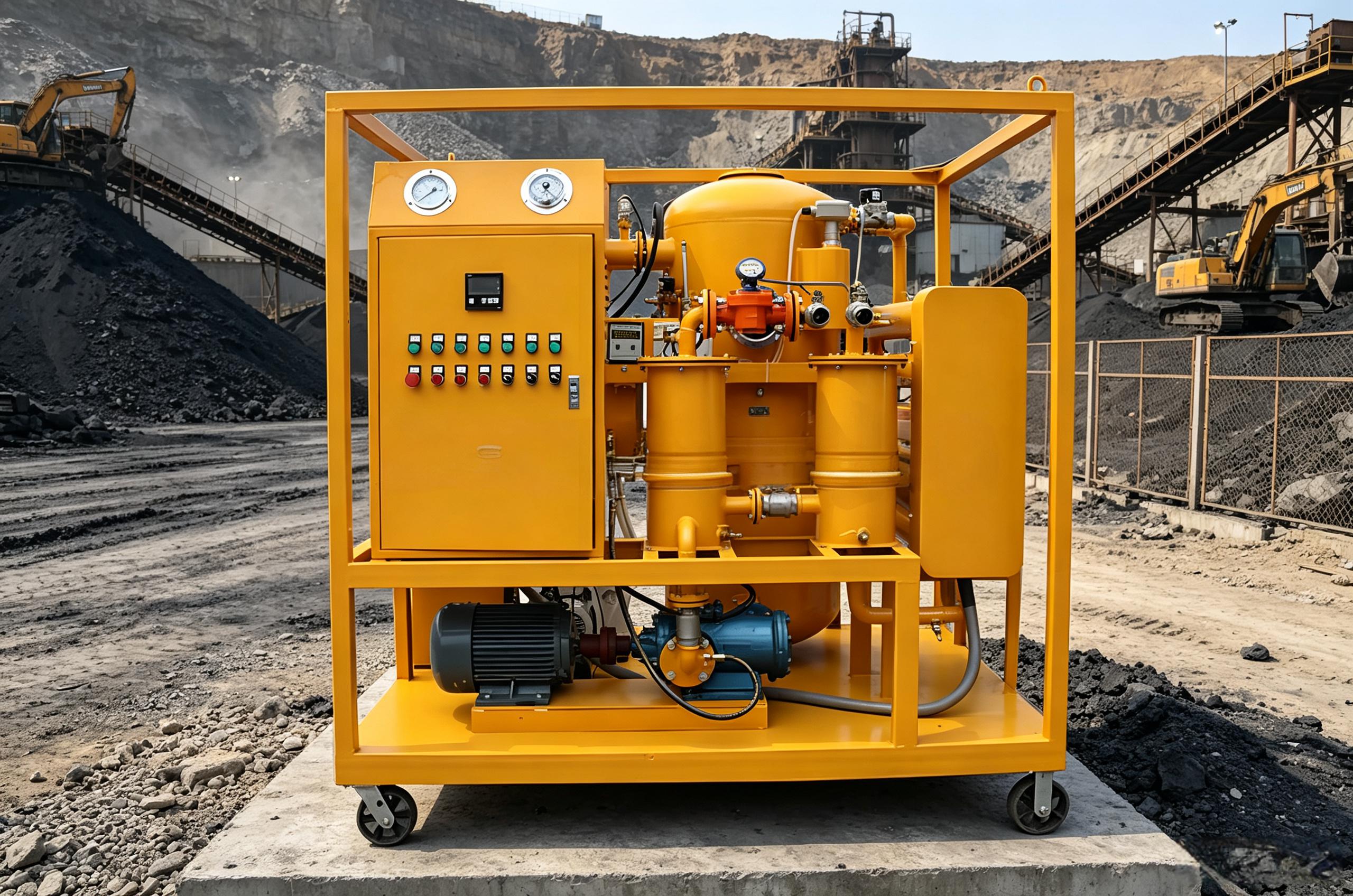
two-stage vacuum transformer oil purification system
A two-stage system is not necessary for every application. A single-stage purifier may be sufficient for routine filtration and moderate dehydration. A two-stage system is more suitable when deep dehydration, low residual moisture, and enhanced degassing are required.
Under suitable operating conditions, a high-efficiency two-stage system can achieve water content of ≤3 ppm. Actual performance depends on the initial moisture level and operating conditions.
Yes. Removing moisture, dissolved gases, and particles can significantly improve the dielectric strength of transformer oil. Under suitable conditions, some high-efficiency systems can achieve BDV ≥75 kV.
For high-voltage transformer applications, conventional filtration may not provide sufficient dehydration and degassing performance when the insulating oil contains significant moisture or dissolved gases.
A two-stage high-efficiency vacuum oil purifier combines a deeper vacuum, efficient dehydration and degassing, and multi-stage filtration to provide more comprehensive transformer oil treatment.
For demanding applications, compare the working vacuum, processing capacity, final water content, BDV performance, and filtration precision rather than selecting equipment based on transformer voltage alone.
For applications requiring deep dehydration and degassing, see our two-stage vacuum transformer oil purification system for more equipment details and technical specifications.
Explosion-Proof Oil Purifier Selection Guide: Which Working Conditions Require One?
How to Prevent Rapid Lubricating Oil Degradation in Steel Mills
Can an Oil Purifier Remove Acid? Understanding the Limits of Oil Regeneration
Chemical Industry Oil Purification: How to Choose the Right Oil Purifier
Why Is Coalescing Water Removal More Stable Than Vacuum Dehydration?