E-mail seo@sino-purification.com

Time:2026-01-05 13:33:25 Reading volume:
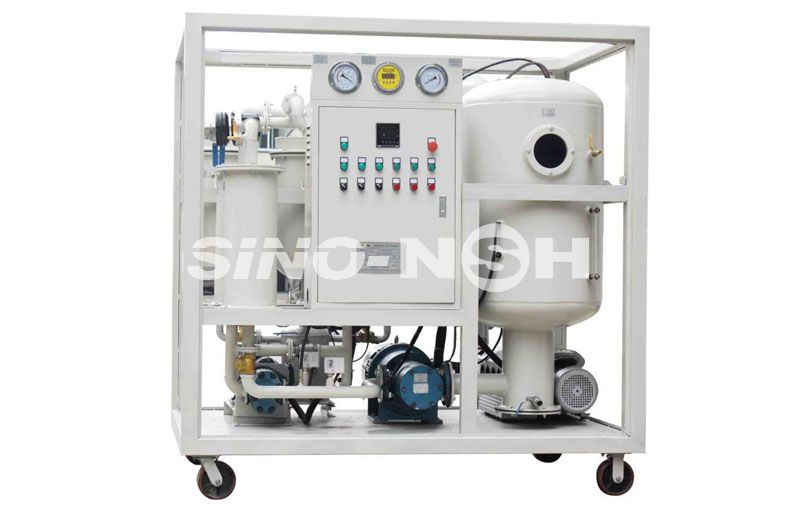
Choosing the correct power rating for a transformer oil filter isn't a straightforward task; it requires careful consideration of various factors. Here's a systematic approach to ensure optimal selection. Core Principle: Flow Rate and Operating Pressure.
The primary power consumption in an oil filter system stems from the oil pump. The power required is dictated by two main factors:
Flow Rate (Q): The volume of oil that needs to be filtered in a given time frame.
Operating Pressure (P): The system resistance that the pump must overcome.
Selection Process
Determine Core Parameters: Flow Rate and Pressure
Flow Rate (Q):
Recommended Range: Typically, the flow rate should be 2-6 times the total oil volume in the transformer tank per hour.
Calculation Formula:
[Q = kV]Where:
V = Total transformer oil capacity (liters or cubic meters)k = Circulation multiple (2-6). Use a higher multiple (4-6) for rapid dehydration and impurity removal, and a lower multiple (2-3) for routine maintenance.
Example: For a 50,000-liter transformer, if k=4:
Q=4×50,000L=200,000L/h=200m^3/h
Working Pressure (P):
This value represents the total resistance the oil filter must overcome, including:
Filter Element Contamination Resistance:
New filters have low resistance (0.02-0.05 MPa), which increases as impurities accumulate (up to 0.3-0.4 MPa when clogged).
Friction and Local Resistance: Caused by pipe length, bends, and valves.
Height Difference: Between the inlet and outlet.
Safety Range: The rated working pressure for vacuum or pressure oil filters used for transformer oil typically ranges between 0.3 and 0.6 MPa.
Estimate Required Power
The formula for estimating the shaft power of the oil pump is:
Pshaft(kW)≈36ηQ(m^3/h)×ΔP(MPa)×ρ(kg/m^3)
Where:
Q: Flow rate (m³/h)ΔP: Pressure difference (MPa)ρ: Density of transformer oil (approximately 850 kg/m³)η: Efficiency of pump and motor (typically 0.5-0.7)
Rule of Thumb: Approximately 1.5 - 3 kW is needed for processing 10 m³/h. For a flow rate of 100 m³/h, motor power may range from 15 kW to 30 kW, depending on design pressure and pump efficiency.
Consider Oil Characteristics and Treatment Objectives
Viscosity: Increases at low temperatures, potentially requiring higher power.
Treatment Objectives:
Dehydration and Degassing: Opt for a high-vacuum oil filter, which may require significant power for the oil pump, vacuum pump, and possibly heating.
Removing Solid Impurities: Use a pressure-type plate and frame oil filter or a precision cartridge filter, focusing mainly on the oil pump's power.
Comprehensive Treatment: Choose vacuum coalescing or two-stage high-vacuum oil filters for complex power configurations.
Equipment Type and Power Configuration
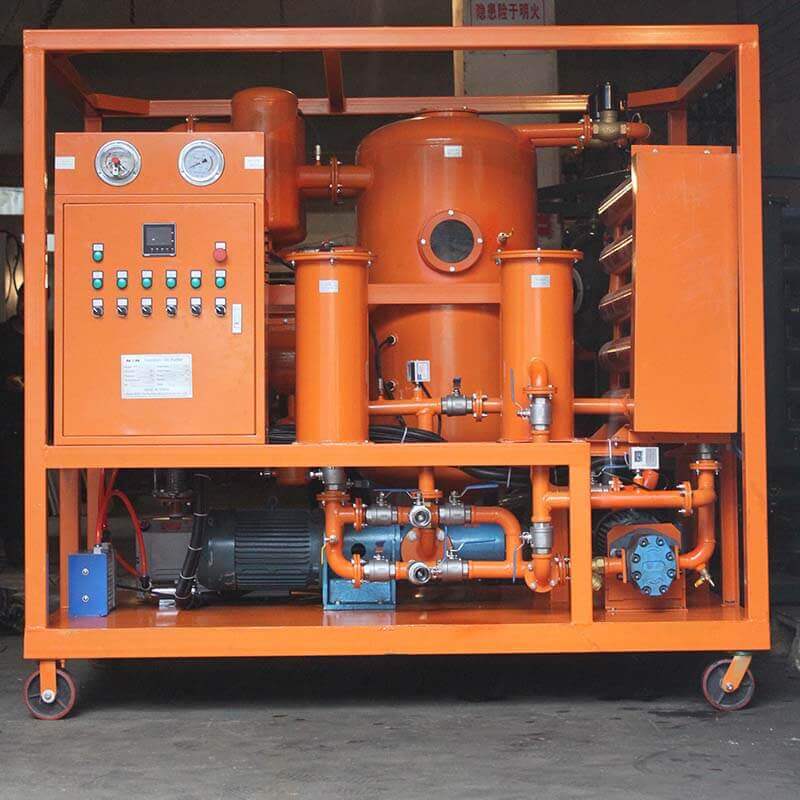
Vacuum Oil Filter: Total power = Oil pump motor + Vacuum pump motor + Electric heater (optional). Heaters can account for a significant portion of total power.
Pressure Oil Filter: Total power primarily comes from the oil pump motor.
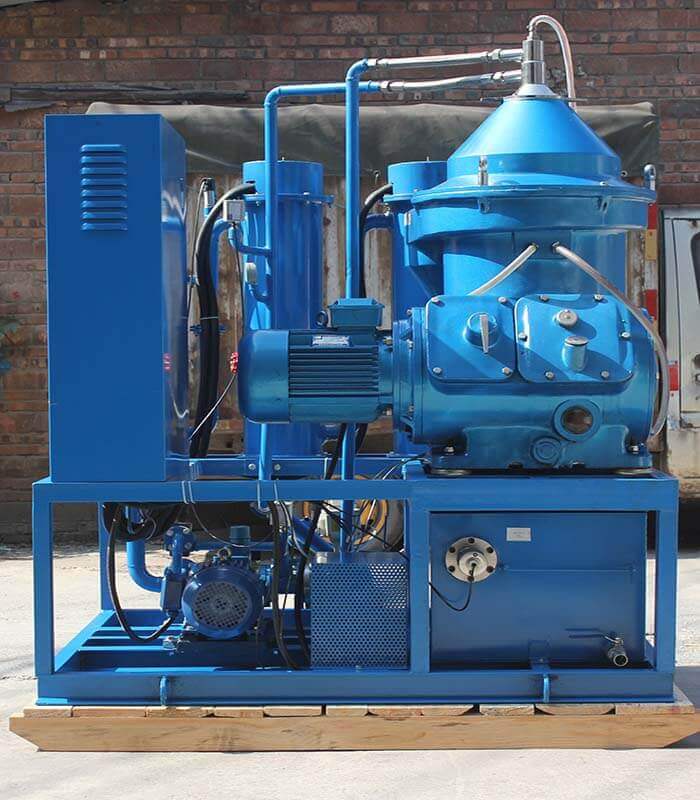
Centrifugal Oil Filter: Total power includes both the centrifuge drum motor and the oil pump motor.
Additional Considerations
Regular Maintenance: Ensure filters are regularly checked and replaced to maintain efficiency.
System Compatibility: Verify that the selected oil filter is compatible with the transformer’s specifications.
By following this structured approach, you can effectively choose the right transformer oil filter power rating to optimize performance and efficiency.