E-mail seo@sino-purification.com

Time:2025-06-09 14:48:04 Reading volume:
A variety of purification methods are available for removing particulate contamination, free and dissolved water, oxidation byproducts, and sludge from industrial lubricating oil.
Maintaining fluid cleanliness is critical to extending machinery operational life, preventing unplanned downtime, and ensuring compliance with international oil cleanliness standards (such as ISO 4406 and NAS 1638).
Choosing the incorrect purification technology can result in premature component failure, bearing abrasion, or severe oil oxidation. Below is a comprehensive engineering overview of the most effective lube oil purification methods used across power generation plants, steel mills, paper factories, and heavy manufacturing facilities.
| Purification Method | Primary Contaminants Removed | Typical Removal Accuracy | Key Advantages | Primary Industrial Applications |
| Mechanical Filtration | Solid debris, metal wear, rust | 3μm – 20μm | High dirt-holding capacity, low cost | Gearboxes, hydraulic power units |
| Centrifugal Separation | Free water, high-density sludge | High speed (5,000+ RPM) | Continuous operation, no media clogging | Steam turbines, marine diesel fuel |
| Vacuum Dehydration | Dissolved/emulsified water, entrained gases | Water < 50 PPM, Gas < 0.1% | Restores dielectric & lubrication properties | Transformer oil, EHC systems |
| Electrostatic Filtration | Sub-micron particles, varnish, sludge | Sub-micron (< 1μm) | Prevents servo valve sticking | High-precision hydraulic systems |
| Coalescing Separation | Free water, emulsified water droplets | Water separation down to 10 PPM | Energy-efficient, low power consumption | Fuel oil treatment, light lube oil |
Mechanical filtration remains the primary line of defense in oil purification. By placing porous media (such as cellulose, synthetic fiber, or stainless steel wire mesh) across the oil flow path, solid particulates are physically trapped.
Filter efficiency depends heavily on the selected micron rating and Beta Ratio (β-value):
Industrial Gearboxes: Typically require a filtration accuracy of 15µm to 20µm to capture coarse metal wear debris.
Sensitive Hydraulic Systems: Demand high-precision filtration rated between 3µm and 10µm (βx ≥ 1000) to protect proportional valves.
Centrifugal separation is a mechanical technique that utilizes strong centrifugal forces—often thousands of times greater than gravity ($G$-force)—to accelerate the separation of immiscible liquids and heavy solids.
During operation within a high-speed rotating bowl:
Heavy solid contaminants and free water are forced outward against the bowl wall.
The purified oil forms an inner layer and is continuously discharged from a separate clean oil outlet.
This method is ideal for applications with high water ingress and heavy particulate loads, such as steam turbine lube oil loops.
While mechanical filters and centrifuges remove free water, they cannot remove dissolved water (water bound at the molecular level). Vacuum Dehydration Units (VDU) solve this by exposing the oil to a low-pressure vacuum chamber.
Operating Principle: Under a high vacuum environment (typically−0.08MPa to−0.095MPa), the boiling point of water drops significantly (to approximately40∘C−55∘C).
Process: Water boils off rapid vapor without causing thermal degradation to the base oil or damaging critical additives. It is the premier technology for achieving ultra-low moisture levels in transformer and turbine oils.
As hydraulic systems operate at elevated temperatures and pressures, oil degradation forms soft contaminants known as varnish or sludge. Standard mechanical filters fail to capture these sub-micron oxidation products because they easily pass through filter pores.
Electrostatic Cleaners: Apply a high-voltage electrostatic field. Charged particles migrate toward oppositely charged collector plates, permanently removing sub-micron contaminants.
Balanced Charge Filtration: Charges oil particles with equal positive and negative forces. As the split oil streams recombine, particles collide and agglomerate into larger clusters, enabling standard high-efficiency filters to trap them easily.
Coalescing systems utilize a two-stage element configuration specifically engineered to remove water from hydrocarbon fluids:
Coalescer Element: Causes tiny, emulsified water droplets to merge into larger droplets as the oil flows from the inside to the outside of the cartridge.
Separator Element: A hydrophobic outer screen blocks the enlarged water droplets while allowing clean oil to pass through. The free water settles by gravity into a sump for automatic discharge.
Sedimentation is the simplest purification method, relying solely on gravity to allow high-density particulate matter and free water to settle at the bottom of a holding tank over time.
While static sedimentation requires no power and involves minimal equipment cost, it is extremely slow, inefficient for fine particles (< 20μm), and unsuited for continuous online industrial applications.
Ion exchange resins and active alumina media are used to extract dissolved oxidation acids, active chemical impurities, and soluble color bodies from industrial lubricants. This process neutralizes elevated Total Acid Numbers (TAN) in aging synthetic and mineral oils, helping restore critical chemical stability.
A: Regular fluid analysis is essential. You should initiate oil purification if laboratory tests reveal fluid cleanliness exceeding target ISO 4406 codes (e.g., target 16/14/11), water content exceeding 100 PPM, elevated Total Acid Number (TAN), or visible cloudiness/darkening in the sight glass.
A: Electrostatic and balanced charge oil purifiers are the most effective solutions for sub-micron contaminants and varnish. Mechanical filters generally cannot capture soft oxidation particles smaller than 3 microns without rapidly clogging.
A: A Centrifugal Separator quickly removes high volumes of free water and coarse heavy solids via rotational force, making it ideal for high-ingression environments. A Vacuum Dehydrator removes dissolved water, emulsified water, and entrained gases down to ultra-low thresholds (< 50 PPM), making it superior for precision insulation and turbine applications.
A: No. Physical purification methods (filtration, centrifuges, vacuum systems) remove physical impurities, water, and gas. They do not replenish depleted additive packages (such as anti-wear or anti-oxidant additives). However, keeping oil clean significantly slows down additive depletion rates.
A: Hydraulic systems containing proportional or servo valves require clean oil rated at ISO 16/14/11 or cleaner. For these systems, select a high-efficiency filter with a rating of
f 3µm to 5µm(Sβx ≤ 1000S). For standard industrial gearboxes, a 10µm to 20µm element is usually sufficient.
Selecting the optimal oil treatment system depends on your fluid viscosity, flow rate requirements, contamination types, and target ISO cleanliness standards.
Whether you require a heavy-duty Vacuum Dehydration Unit, a high-speed Centrifugal Separator, or customized Industrial Filtration Units, our engineering team provides complete oil analysis support and custom equipment design.
Contact Our Engineering Specialists for a Free Technical Consultation & Quote
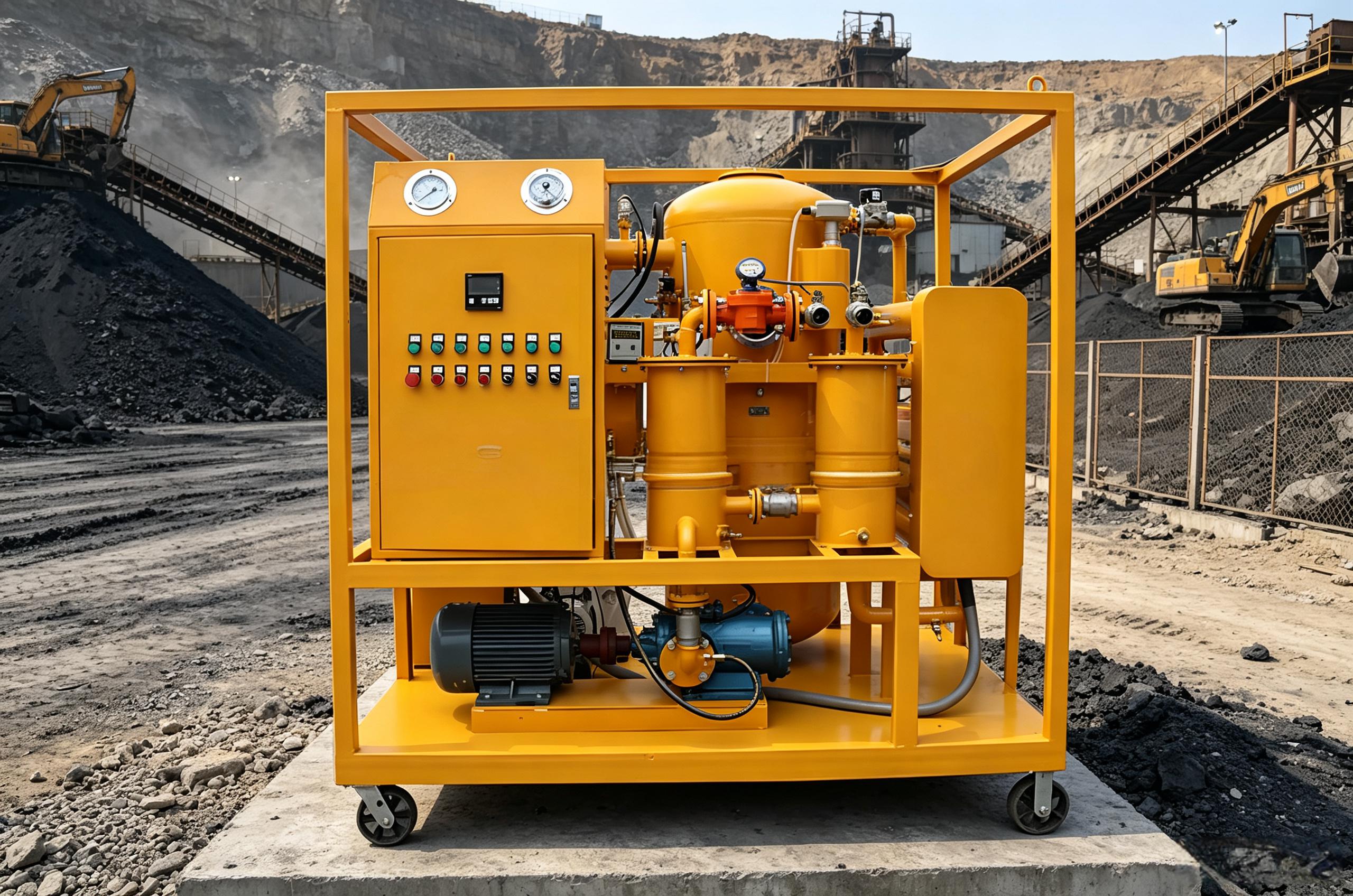
Explosion-Proof Oil Purifier Selection Guide: Which Working Conditions Require One?
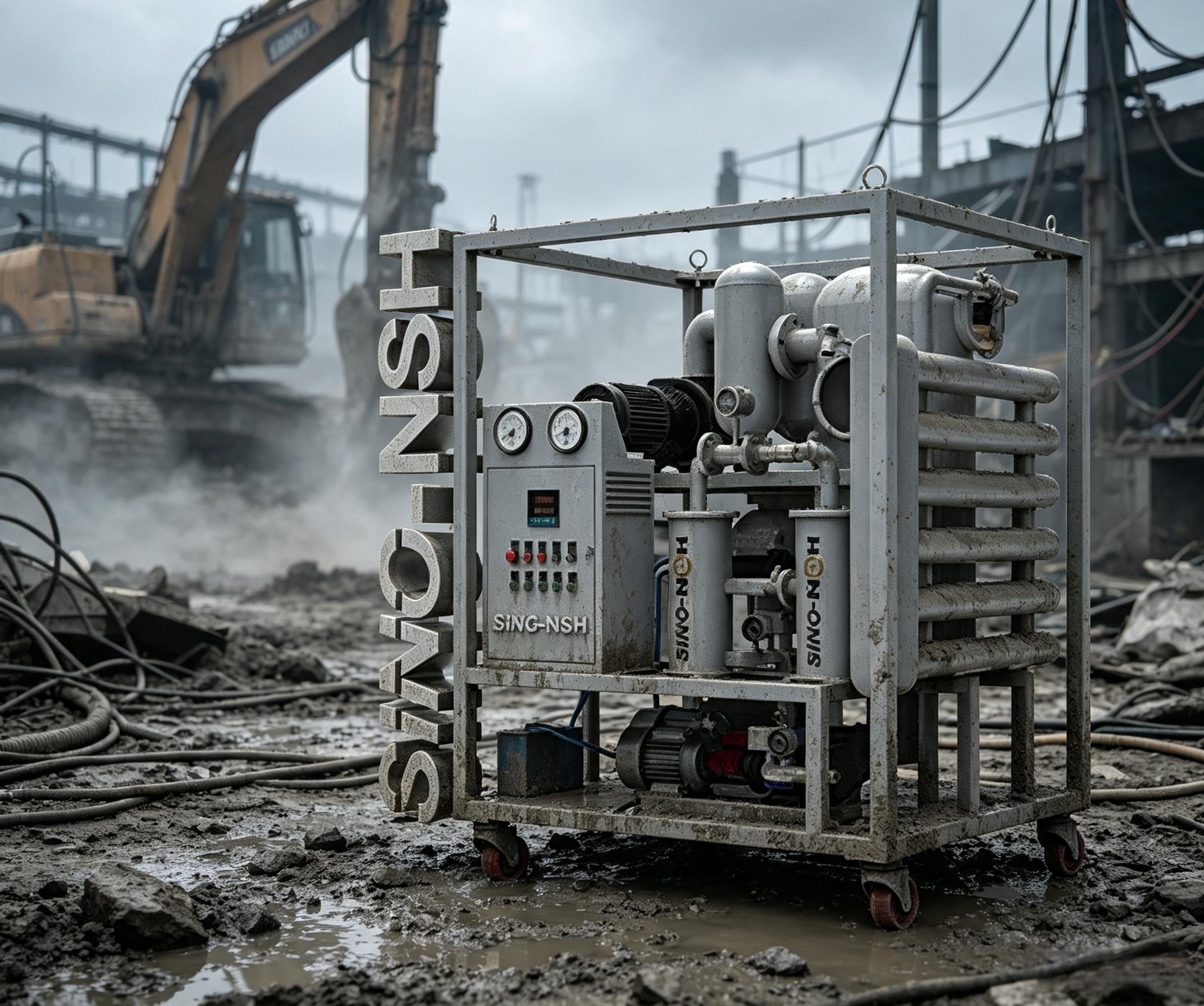
How to Prevent Rapid Lubricating Oil Degradation in Steel Mills
Can an Oil Purifier Remove Acid? Understanding the Limits of Oil Regeneration
Chemical Industry Oil Purification: How to Choose the Right Oil Purifier
Why Is Coalescing Water Removal More Stable Than Vacuum Dehydration?