E-mail seo@sino-purification.com

Time:2025-03-31 14:26:33 Reading volume:
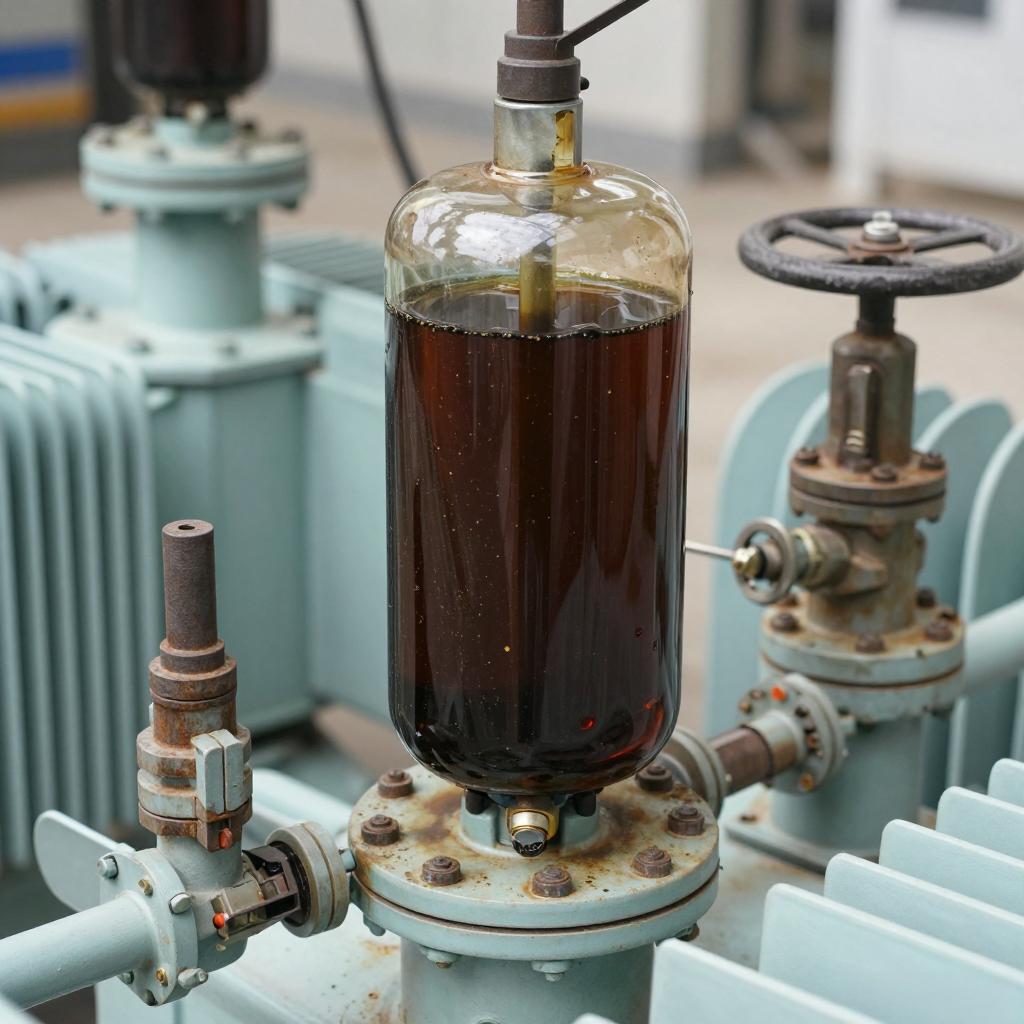
Whether used transformer oil can continue to be used requires a comprehensive judgment based on the oil quality test results and specific application scenarios. The following are the key evaluation steps and decision-making basis:
| Test items | Qualification standards | Risk of exceeding standards |
|--------------------|-----------------------------|--------------------------------|
| Breakdown voltage | ≥30 kV (operating oil) | Insulation performance decreases, which may cause short circuits |
| Moisture content | ≤30 ppm (conventional)/ ≤15 ppm (ultra-high voltage) | Accelerate oil aging and reduce dielectric strength |
| Acid value | ≤0.1 mg KOH/g | Corrosion of metal parts inside equipment |
| Dielectric loss factor | ≤0.04 (at 90°C) | Increased insulation loss and heating risk |
| Particle contamination | NAS 1638 Class 8 or less | Blocking cooling channels and affecting heat dissipation |
| Dissolved gas analysis | No abnormal gas (such as sudden increase in acetylene and hydrogen) | Indication of internal discharge or overheating failure |
1. Mild pollution (indicators are close to qualified)
- Treatment method: vacuum filtration + precision filter element dust removal.
- Effect: The insulation performance can be restored and it can continue to be used for the original equipment or a low-voltage transformer.
2. Moderate pollution (acid value/water content slightly exceeds the standard)
- Treatment method:
- Vacuum dehydration (60~65°C, vacuum degree ≤0.5 kPa).
- Adsorbent treatment (silica gel or activated alumina to remove acidic substances).
- Application scenario: non-critical equipment or short-term emergency use.
3. Severe pollution (multiple indicators exceed the standard)
- Treatment method:
- Chemical regeneration: white clay adsorption or sulfuric acid-alkali washing (professional equipment is required).
- Degraded use: as heat treatment oil or mechanical lubricant (non-power use).
- Note: If acetylene (C₂H₂) or metal particles are detected, it indicates an internal fault and the oil should be scrapped.
When any of the following conditions occur, the oil must be replaced:
- Breakdown voltage < 20 kV (even after filtration, it still does not meet the standard).
- Acid value > 0.3 mg KOH/g (indicating severe oxidation).
- Oil sludge or carbonized particles are visible to the naked eye (physical irreversible contamination).
- Dissolved gas indicates internal faults (such as acetylene > 5 ppm).
1. Waste oil treatment:
- Direct dumping is prohibited and must be handed over to a qualified waste oil recycling company (refer to the "National Hazardous Waste List").
- You can contact a professional company for regeneration and refining (such as distillation and purification).
2. Operational safety:
- Fire and explosion prevention during filtration (oil temperature is controlled below 70°C).
- Let the oil sample stand for 24 hours before testing to avoid bubbles interfering with the results.
- Comparison of costs:
- The cost of filtration and regeneration is about 30%~50% of the new oil.
- If the treatment cost exceeds 70% of the new oil price, it is recommended to replace it directly.
Conclusion: Used transformer oil can be reused after professional testing and treatment, but strict evaluation indicators and equipment requirements are required. If the pollution is serious or involves high-voltage equipment, it is safer and more reliable to replace with new oil.
Explosion-Proof Oil Purifier Selection Guide: Which Working Conditions Require One?
How to Prevent Rapid Lubricating Oil Degradation in Steel Mills
Can an Oil Purifier Remove Acid? Understanding the Limits of Oil Regeneration
Chemical Industry Oil Purification: How to Choose the Right Oil Purifier
Why Is Coalescing Water Removal More Stable Than Vacuum Dehydration?